Unauthorized entry does not always happen by forcing a gate or bypassing a security system. In some cases, an unauthorized person or vehicle simply follows an authorized one through an entry point. This is commonly known as tailgating.
Tailgating can create security gaps at residential societies, offices, commercial buildings, warehouses, and other controlled-access properties.
What Is Tailgating in Security?
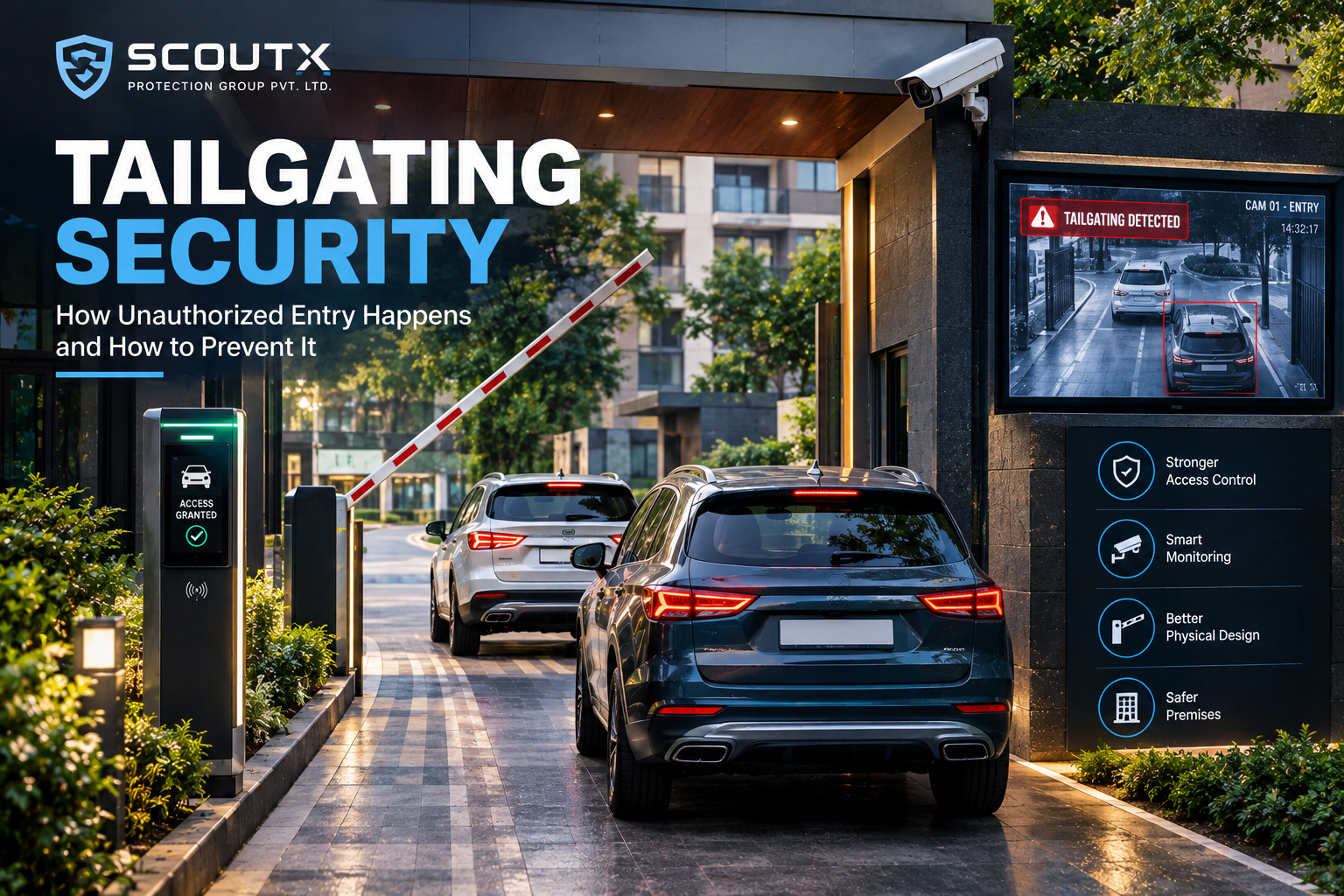
Tailgating occurs when an unauthorized person or vehicle enters a secured area by following closely behind an authorized person or vehicle without completing the required verification process.
For example, a vehicle with valid access may pass through an automated gate while another vehicle follows before the gate closes. A similar situation can occur when an unauthorized person enters through a controlled pedestrian door immediately after an authorized person.
How Tailgating Happens at Security Gates
Tailgating can happen for several reasons. Gates may remain open for too long, vehicles may enter closely together, or people may assume that someone following them has already been verified.
At busy entry points, pressure to keep traffic moving can also result in security checks being skipped.
Vehicle Tailgating and Pedestrian Tailgating
Vehicle tailgating usually involves one vehicle following another through a barrier or access-controlled gate.
Pedestrian tailgating can occur at office entrances, residential access points, restricted corridors, or other controlled doors when one person enters immediately behind an authorized individual.
Both situations can allow unauthorized access if proper procedures are not followed.
Role of Security Personnel
Security personnel play an important role in identifying and preventing tailgating. Entry procedures should require vehicles and individuals to follow the property's approved verification process.
When necessary, security personnel can check access credentials, confirm visitor details, monitor vehicle movement, and ensure that vehicles do not enter together without authorization.
Technology and Physical Security Measures
Technology can support efforts to prevent tailgating. CCTV cameras, access-control systems, vehicle barriers, automatic gates, and other security systems can help monitor entry points.
Physical arrangements such as sufficient space between vehicles, controlled pedestrian doors, and suitable gate layouts can also reduce opportunities for unauthorized entry.
Why CCTV Monitoring Matters
CCTV can help security teams observe unusual entry patterns and review incidents when required.
Cameras should be positioned to provide clear views of entry and exit points, vehicle lanes, pedestrian access areas, and other locations where unauthorized following could occur.
Creating an Anti-Tailgating Procedure
Properties should have clear procedures for handling suspected tailgating. These procedures may include verifying the second vehicle or person, recording the incident, informing the security supervisor, and escalating the matter according to site instructions.
Security procedures should also be communicated clearly to residents, employees, visitors, and other authorized users so that access-control rules are consistently followed.
Common Mistakes That Increase Tailgating Risk
Keeping gates open unnecessarily, allowing vehicles to pass without verification, failing to monitor access points, and assuming that every person or vehicle entering behind an authorized user is legitimate can increase security risks.
Regular supervision and periodic review of entry procedures can help identify these weaknesses.
Final Thoughts
Tailgating is a simple but important access-control risk. Preventing it requires a combination of clear procedures, attentive security personnel, suitable physical arrangements, and appropriate technology.
By identifying how tailgating can occur and establishing consistent entry procedures, properties can strengthen access control and reduce the possibility of unauthorized entry.