A security operation does not end when one shift finishes. The transition between outgoing and incoming security personnel is an important part of maintaining continuous protection at a property.
A proper security shift handover ensures that important information is communicated clearly, pending issues are not overlooked, and the incoming team understands the current security situation.
What Is a Security Shift Handover?
A security shift handover is the formal transfer of security responsibilities and relevant information from one shift to the next.
During the handover, the outgoing team communicates important updates about incidents, visitors, vehicles, access points, equipment, keys, instructions, and other matters that may require attention.
Why Security Shift Handover Matters
Without a proper handover, important information can be missed between shifts. A pending issue may not be communicated, an equipment problem may remain unresolved, or the incoming team may not be aware of a recent incident.
A structured handover creates continuity and helps ensure that security responsibilities remain clearly assigned.
Information That Should Be Shared
The outgoing security team should communicate relevant information such as:
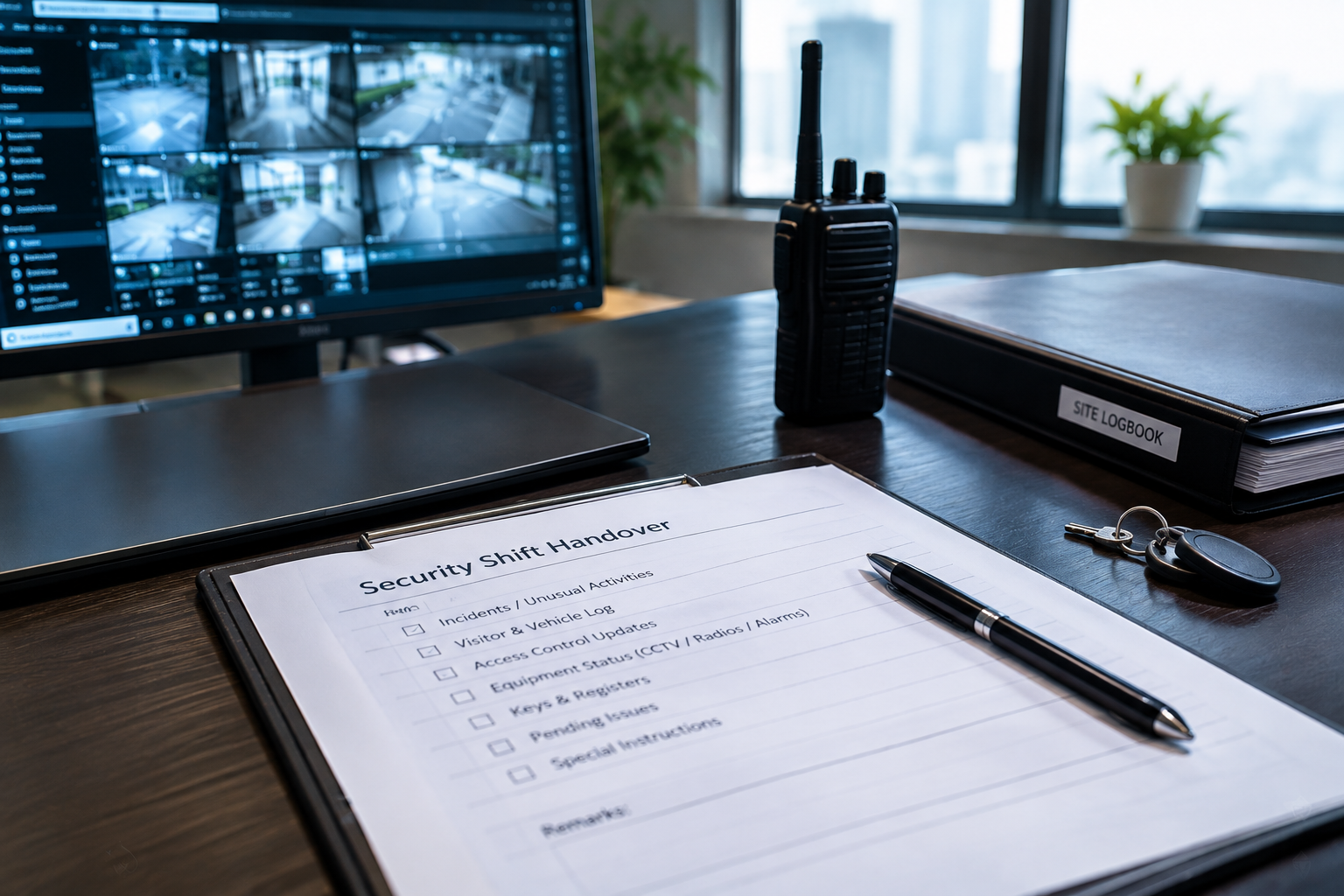
• Incidents or unusual activities during the previous shift
• Pending visitor or vehicle-related concerns
• Unresolved security issues
• Access-control problems
• CCTV or communication equipment issues
• Keys, registers, and other security-related items
• Special instructions from management or the security supervisor
Maintaining Proper Handover Records
Important information should not depend only on verbal communication. Security logs, registers, or digital reporting systems can provide a record of incidents and pending matters.
Accurate records also help supervisors review recurring issues and verify whether important tasks have been completed.
Role of the Security Supervisor
A security supervisor can help ensure that shift handovers are completed properly. Supervisors may review important updates, verify pending issues, check security records, and communicate specific instructions to the incoming team.
This helps maintain accountability and reduces the possibility of information being missed during shift changes.
Common Shift Handover Mistakes
Some common problems include rushing the handover, failing to record incidents, leaving pending issues unexplained, not checking security equipment, and assuming that the incoming team already knows what happened during the previous shift.
A short but structured handover can help prevent these gaps.
Creating a Security Handover Checklist
A simple checklist can make the process more consistent. It can include incident updates, visitor and vehicle concerns, equipment status, keys and registers, pending instructions, and any specific areas requiring attention.
The checklist should be practical and suited to the requirements of the property.
Final Thoughts
An effective security shift handover is an important part of continuous security operations. Clear communication, accurate records, supervisor oversight, and a structured checklist can help ensure that important information is transferred between shifts.
When every shift begins with a clear understanding of the property's current security situation, security teams can work with greater consistency, accountability, and coordination.