Basement parking areas are often overlooked when planning property security. Although they are primarily designed for vehicle parking, they also contain pedestrian routes, service doors, ramps, storage areas, and emergency exits that require proper monitoring.
Limited natural light, structural pillars, blind corners, and multiple access points can make these areas difficult to supervise. Effective basement parking security therefore requires more than simply installing CCTV cameras or protecting parked vehicles.
Why Basement Parking Requires Special Attention
Basement parking differs from open parking areas because visibility can be limited by pillars, walls, ramps, and parked vehicles. Some sections may receive little regular foot traffic, while others experience frequent movement during peak hours.
These conditions can make it difficult to identify unusual activity unless surveillance, lighting, access control, and physical inspections work together.
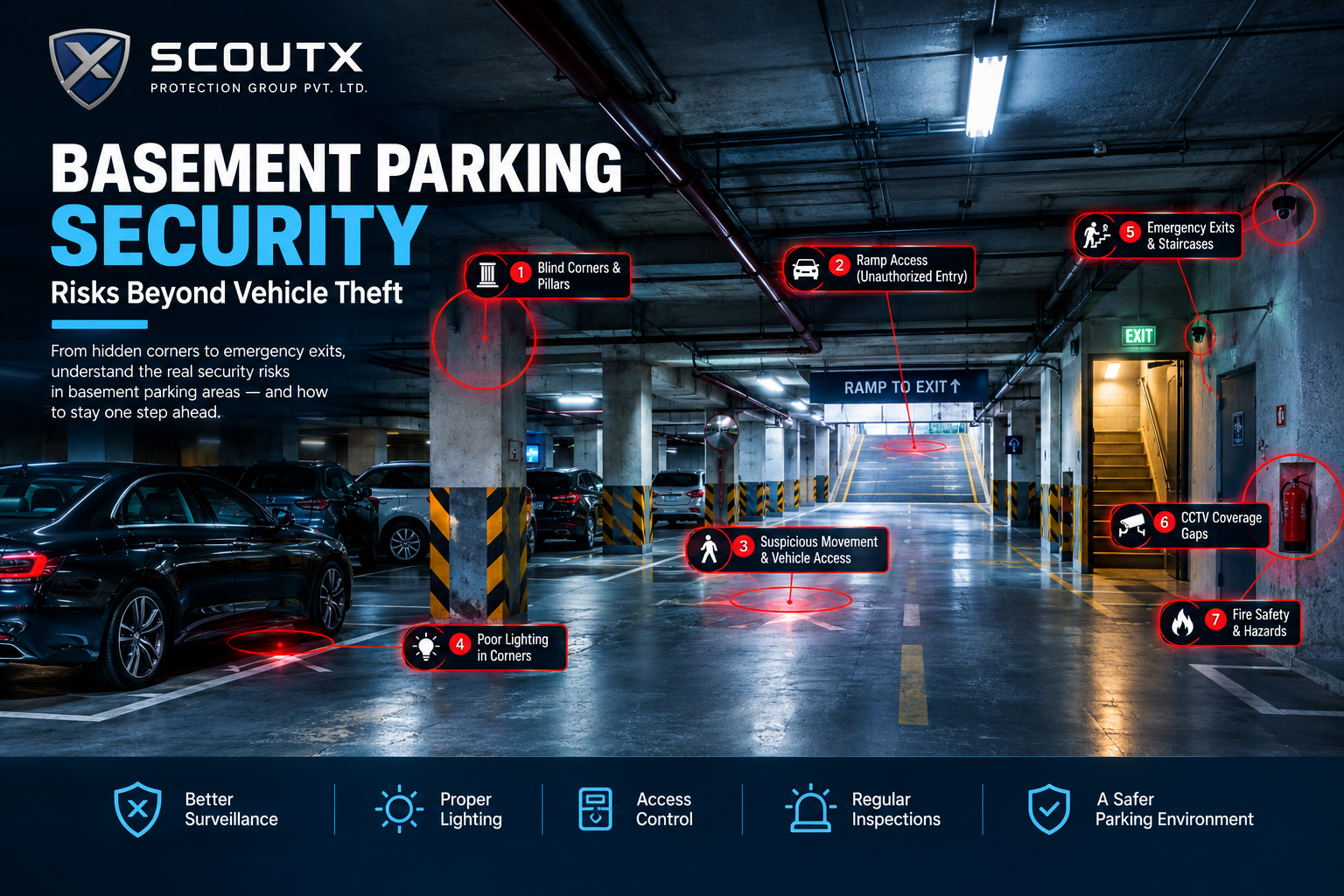
1. Poor Visibility Around Pillars and Corners
Large pillars, turning points, and enclosed parking sections can obstruct visibility. A person entering or moving through these areas may not be clearly visible from every camera angle.
Property managers should review camera coverage from different viewpoints and ensure that important vehicle lanes, pedestrian routes, and less-visible corners receive suitable coverage.
2. Unauthorized Entry Through Ramps and Side Access Points
Vehicle ramps are not the only routes into a basement. Pedestrian doors, service corridors, lift lobbies, and connecting staircases may also provide access.
Each entry point should have appropriate access procedures. Security personnel should know which doors are restricted, which routes are open to residents or employees, and how visitors and service personnel should be verified.
3. Vehicle Movement and Suspicious Activity
Repeated movement through parking areas, vehicles entering without proper authorization, or people accessing vehicles without a clear reason may require attention.
Security personnel should follow site procedures, observe unusual activity without making assumptions, and report concerns to the supervisor. Vehicle access records, where available, can also support incident reviews.
4. Poor Lighting in Low-Traffic Sections
Some parking bays, corners, and pedestrian pathways may remain poorly lit, particularly when lights are damaged or maintenance is delayed.
Lighting inspections should be included in routine checks. Faulty lights should be reported promptly, and emergency lighting should be maintained according to the property's safety requirements.
5. Emergency Exits and Staircase Access
Basement parking areas may connect to emergency staircases, fire exits, and other routes used during an evacuation.
These routes must remain accessible and free from obstructions. Security teams should report blocked exits, damaged doors, or other hazards immediately and follow the property's emergency procedures. Security measures must never obstruct required fire escape routes.
6. CCTV Coverage and Monitoring Gaps
Installing cameras does not automatically ensure complete coverage. Pillars, poorly chosen camera angles, glare, low-light conditions, and changes in parking layouts can reduce visibility.
Periodic reviews should confirm that cameras provide useful views of ramps, vehicle lanes, pedestrian entrances, lift lobbies, and other critical areas. CCTV should support physical security checks rather than replace them.
7. Fire Safety and Vehicle-Related Hazards
Basement parking areas can contain additional risks involving vehicle fires, smoke, electrical equipment, and blocked access routes.
Security personnel should know the site's alarm and emergency communication procedures, the location of emergency exits, and the process for contacting the designated response team. Fire equipment and evacuation routes should remain accessible, with inspections handled according to applicable safety requirements.
8. Creating an Effective Basement Security Routine
A practical routine should include checking entry points, inspecting lighting, observing vehicle and pedestrian movement, reporting damaged equipment, and verifying that emergency routes are clear.
The security supervisor should ensure that observations and incidents are recorded properly. Repeated issues should be reviewed with property management so that corrective action can be taken.
Final Thoughts
Basement parking security involves more than preventing vehicle theft. Poor visibility, uncontrolled access, lighting failures, CCTV gaps, and blocked emergency routes can all affect the safety of a property.
A combination of suitable surveillance, clear access procedures, regular inspections, maintenance, and trained security personnel can help property managers identify weaknesses and maintain a safer parking environment.