Power failures can affect more than lighting and electrical equipment. In residential societies, offices, commercial buildings, and industrial facilities, an outage may also interrupt CCTV monitoring, access-control systems, elevators, and communication equipment.
A clear security plan helps property management and security teams respond to these situations in an organized manner while reducing confusion and maintaining essential security procedures.
Why Power Failure Creates Security Challenges
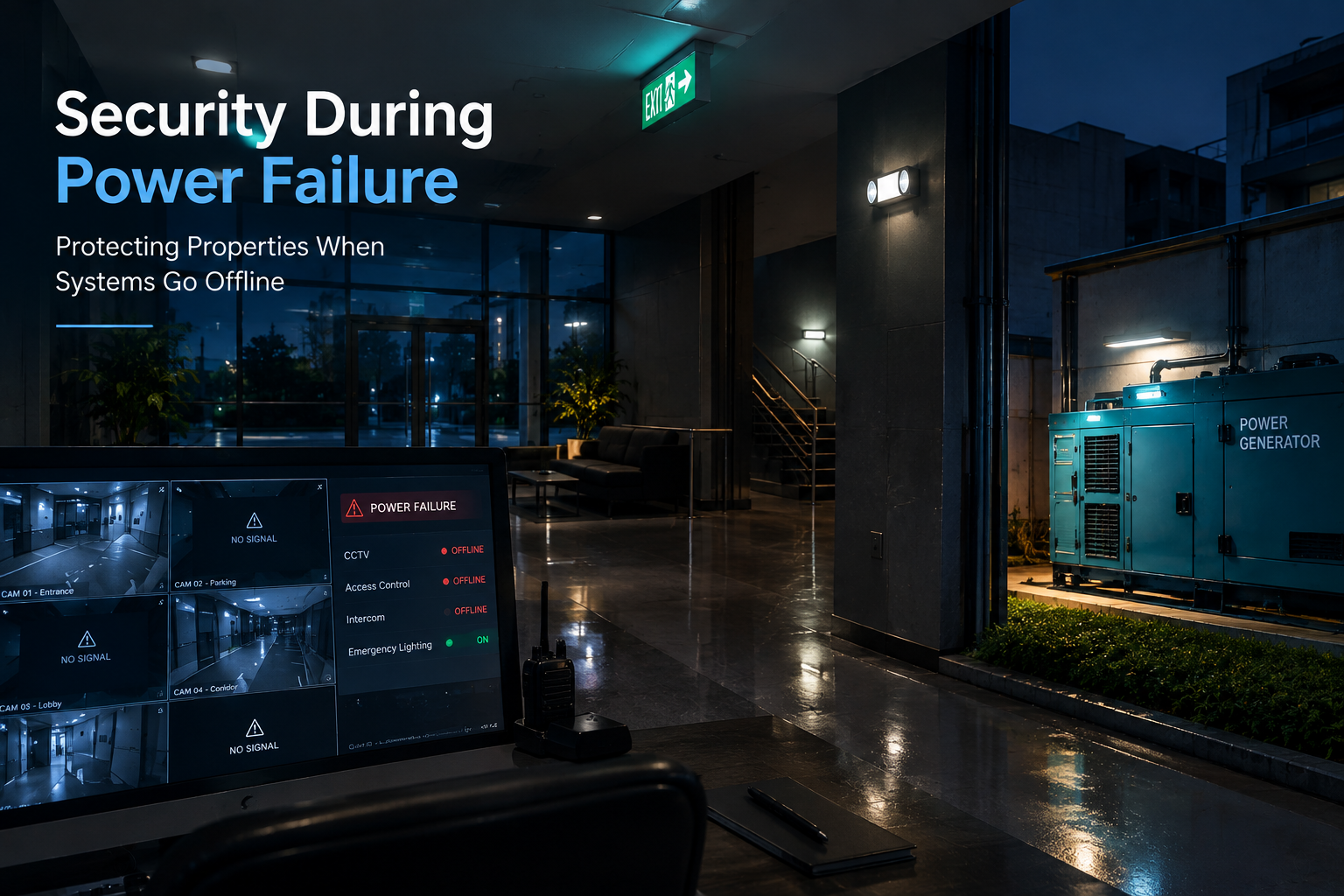
During a power outage, some security systems may stop working or switch to backup power. Poor visibility can make it harder to monitor entry points, parking areas, staircases, and boundary zones.
Electronic gates, access cards, CCTV cameras, and intercom systems may also become unavailable depending on their backup arrangements. These conditions can create security gaps if alternative procedures are not prepared in advance.
Maintain Backup Lighting
Adequate lighting is important for safe movement and effective security monitoring. Properties should identify critical areas that require emergency lighting, including main entrances, staircases, corridors, parking areas, and emergency exits.
Backup lights should be inspected and maintained according to the property's safety procedures. Security personnel should also know which areas may become difficult to monitor during an outage.
Prepare for CCTV and Access-Control Downtime
Security teams should understand what to do if CCTV cameras, electronic gates, or access-control systems stop functioning.
If electronic access systems become unavailable, guards may need to follow an approved manual entry procedure. This may include verifying visitors with residents or authorized staff, recording entries, and monitoring vehicle movement.
Manual procedures should be established by property management and communicated to the security team before an emergency occurs.
Strengthen Entry and Exit Monitoring
During a power failure, entry points may require additional attention. Security guards should follow the property's approved access-control instructions and ensure that visitors and vehicles are properly verified.
If an automatic gate cannot operate, the team should use the designated alternative process. Emergency access routes must remain clear, and unauthorized entry should not be permitted simply because normal systems are unavailable.
Maintain Communication During the Outage
Communication is essential when regular systems are disrupted. Security teams should know how to contact supervisors, property management, maintenance personnel, and emergency services when required.
Where permitted, charged mobile phones, radios, and backup communication equipment can help maintain coordination. Important updates should be shared clearly so that all concerned personnel understand the situation.
Role of Security Guards and Supervisors
Security guards should remain alert, follow established procedures, report equipment failures, and monitor assigned areas. They should not attempt electrical repairs or operate unfamiliar equipment.
Security supervisors can coordinate the response, confirm that critical posts are covered, communicate with management, and ensure that important incidents or system failures are recorded.
Create a Power Failure Security Checklist
A practical checklist can help properties prepare for outages. It may include:
• Backup lighting and power arrangements
• CCTV and access-control backup status
• Manual visitor and vehicle entry procedures
• Emergency contact details
• Communication equipment availability
• Critical areas requiring additional monitoring
• Incident reporting and escalation instructions
The checklist should be reviewed periodically and updated when property systems or procedures change.
Final Thoughts
Power failures can interrupt important security systems, but preparation can help reduce operational gaps. Backup lighting, clear manual procedures, reliable communication, and trained security personnel all contribute to a coordinated response.
Property management, maintenance teams, security supervisors, and guards should understand their responsibilities before an outage occurs. A well-prepared plan helps maintain essential security operations while supporting the safety of residents, employees, visitors, and the property.