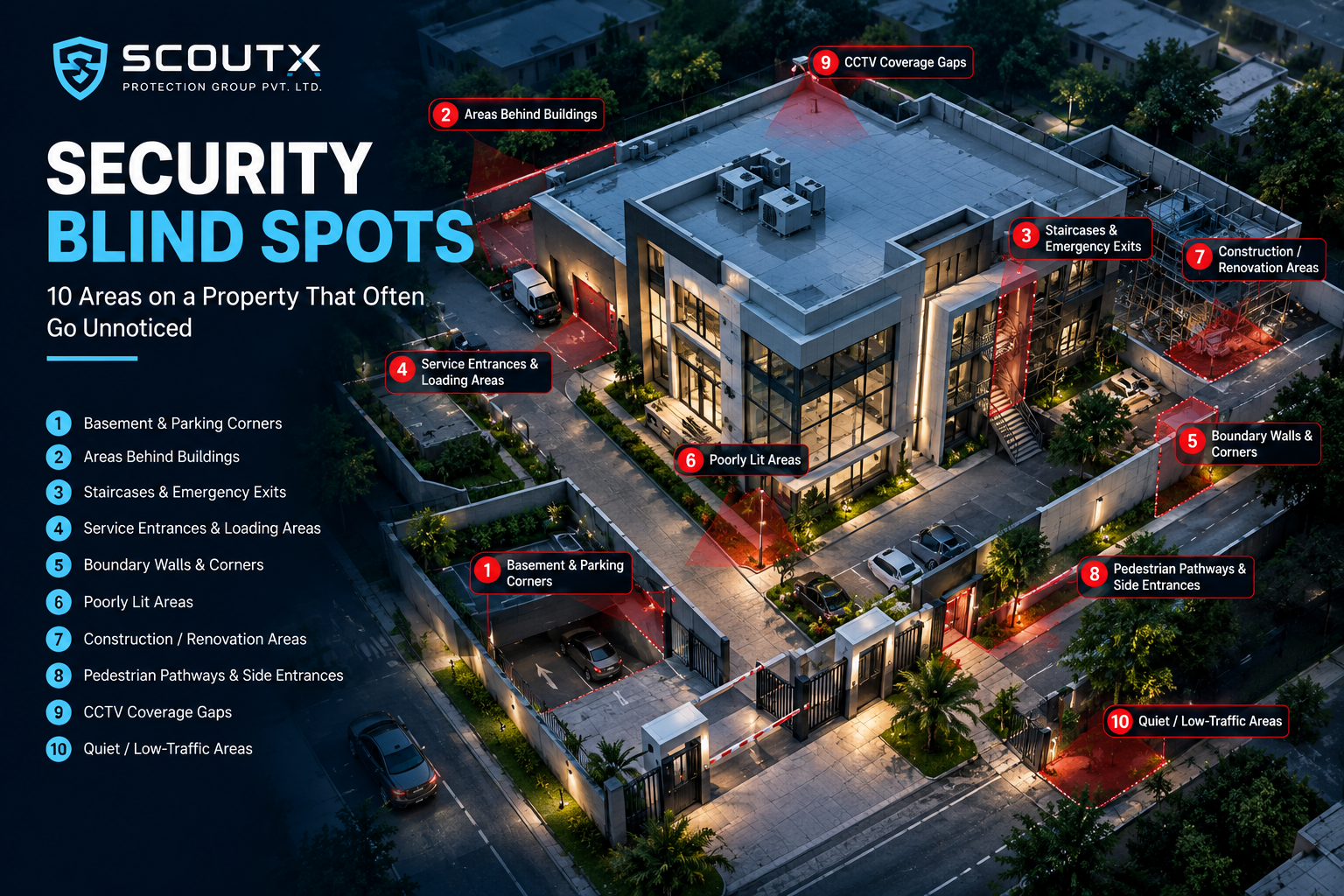
Security systems can be well planned, yet certain areas of a property may remain poorly monitored or completely overlooked. These areas are known as security blind spots.
A blind spot does not always mean that there is no CCTV camera. It can also be an area with poor lighting, limited visibility, restricted access, or insufficient security checks. Identifying these weak points is an important part of effective property security.
What Is a Security Blind Spot?
A security blind spot is an area where suspicious activity may go unnoticed because visibility, surveillance, lighting, or physical security is inadequate.
Blind spots can develop because of building layouts, landscaping, parked vehicles, structural changes, poorly positioned cameras, or areas that security teams do not regularly inspect.
1. Basement and Parking Corners
Basements and parking areas can contain corners, pillars, ramps, and storage sections that are difficult to observe.
CCTV coverage should provide clear visibility of vehicle movement, pedestrian routes, entry and exit points, and less-visible corners. Regular physical checks are also important.
2. Areas Behind Buildings
The rear side of a building may receive less attention than the main entrance. Service lanes, boundary walls, utility areas, and rear doors can become potential weak points.
These areas should be included in routine security patrols and surveillance planning.
3. Staircases and Emergency Exits
Emergency exits and staircases are necessary for safety but may not receive the same level of monitoring as main entrances.
Security teams should ensure that restricted exits are monitored appropriately and that unusual movement can be identified.
4. Service Entrances and Loading Areas
Delivery zones often have frequent movement of employees, vendors, drivers, and materials. This activity can make it easier for unauthorized access to go unnoticed.
Clear visitor procedures, vehicle verification, and CCTV coverage can help maintain control.
5. Boundary Walls and Corners
Boundary walls can create hidden sections, particularly where buildings, trees, parked vehicles, or other structures block visibility.
Security inspections should cover the complete perimeter rather than focusing only on the main gate.
6. Poorly Lit Areas
Even a camera may provide limited useful information when an area is poorly illuminated.
Lighting should be reviewed around entrances, parking areas, pathways, service zones, boundaries, and other locations where visibility is important.
7. Temporary Construction or Renovation Areas
Construction can completely change the security layout of a property. Temporary gates, open sections, scaffolding, material storage, and additional workers can create new blind spots.
Security arrangements should be reviewed whenever the physical layout of a property changes.
8. Pedestrian Pathways and Side Entrances
Small pedestrian entrances are sometimes treated as low-risk areas. However, uncontrolled movement through these points can create an access-control weakness.
These entrances should have appropriate access procedures and visibility.
9. Areas Around CCTV Coverage Gaps
CCTV systems can have overlapping coverage gaps caused by building structures, camera angles, obstructions, or changes made after installation.
A camera map should be periodically reviewed to identify areas that cannot be clearly observed.
10. Quiet or Low-Traffic Areas
Storage rooms, utility zones, isolated corridors, and other low-traffic areas can easily become overlooked because they are not constantly active.
Regular patrols and scheduled inspections can help prevent these locations from becoming security weaknesses.
How to Identify Security Blind Spots
Finding blind spots requires more than checking whether cameras are installed. Security teams should physically walk through the property, review camera coverage, inspect lighting, check access points, and consider how people and vehicles actually move around the site.
The assessment should also be repeated after construction, landscaping, parking changes, or modifications to access routes.
Why Regular Security Inspections Matter
Security blind spots can change over time. A newly parked vehicle, growing tree, construction barrier, damaged light, or relocated entrance can create a weakness that did not previously exist.
Regular inspections help security teams identify these changes before they become larger problems.
Final Thoughts
A property does not become secure simply because it has guards, CCTV cameras, or access-control systems. Effective security depends on how well these measures cover the entire property.
Identifying blind spots, improving visibility, maintaining proper lighting, reviewing surveillance coverage, and conducting regular physical inspections can significantly strengthen overall security.