Hiring a security guard is only the beginning of maintaining effective security. Even experienced guards need regular training to stay prepared, understand updated procedures, and respond correctly when situations change.
Regular security guard training helps maintain professional standards and ensures that guards remain confident and alert while performing their duties.
Why Initial Security Training Matters
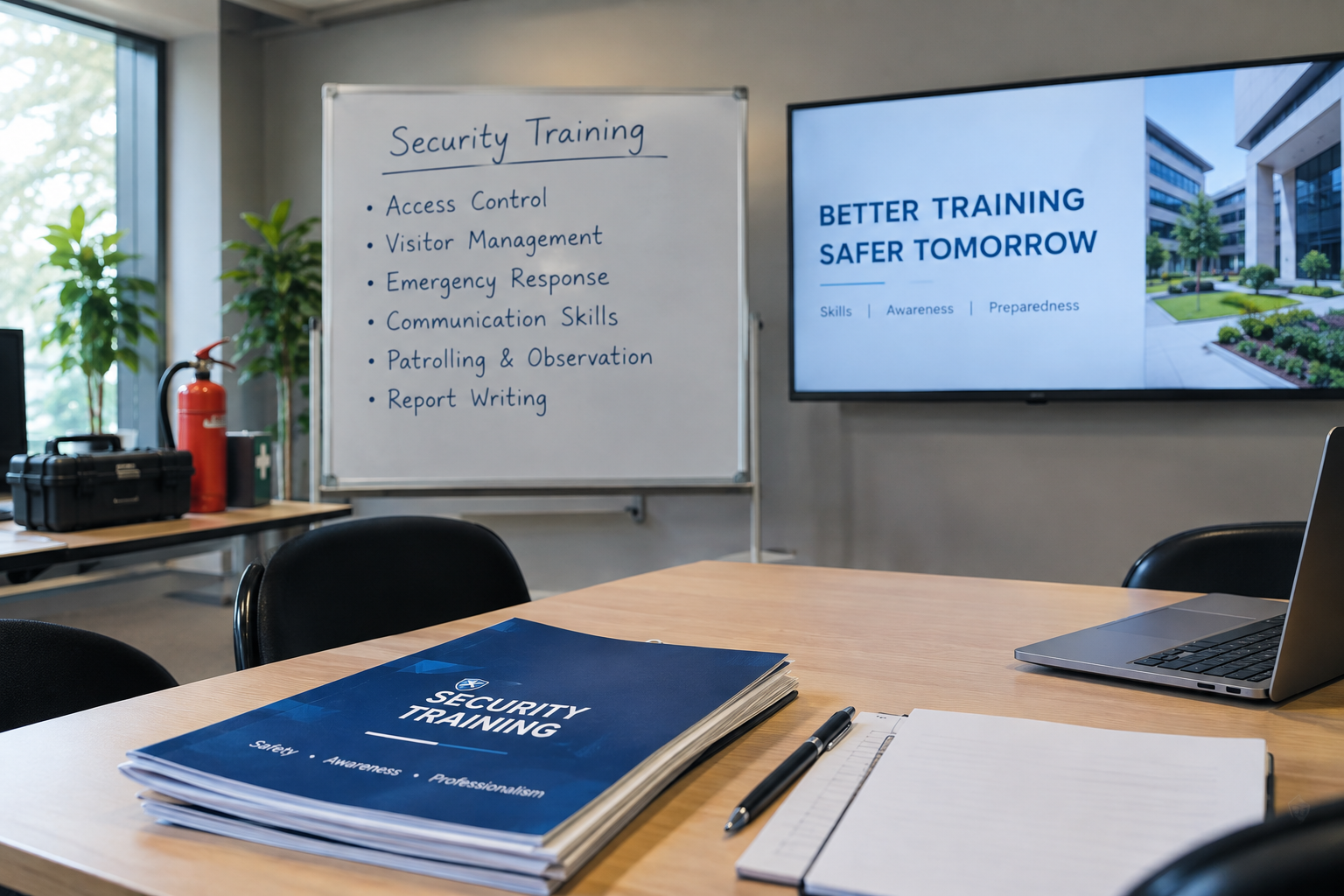
Initial training gives security guards the basic knowledge required for their role. This can include access control, visitor management, patrolling, communication, incident reporting, emergency procedures, and professional conduct.
Proper training helps guards understand not only what they have to do, but also how and when to do it.
Why Refresher Training Is Important
People can forget procedures when they are not regularly practiced. Refresher training reinforces important responsibilities and helps guards remember the correct steps to follow.
It also provides an opportunity to address mistakes, clarify doubts, and introduce improvements to existing security procedures.
Improving Emergency Response
Security guards may have to respond to unexpected situations such as fire, medical emergencies, unauthorized entry, accidents, or security incidents.
Regular practical training can help guards understand their responsibilities during an emergency and improve coordination with supervisors, management, emergency services, and other personnel.
Strengthening Communication Skills
Security work involves constant communication with residents, employees, visitors, supervisors, and property management.
Training can help guards communicate clearly and professionally, especially when dealing with difficult situations or explaining security procedures to visitors.
Keeping Guards Alert and Professional
Routine training reinforces the importance of alertness, discipline, punctuality, proper uniform, professional behaviour, and following site-specific instructions.
It can also remind guards about common security weaknesses and the importance of reporting unusual activity instead of ignoring it.
Site-Specific Training
Every property has different security requirements. A residential society may focus on visitor and vehicle management, while a commercial property may require greater attention to employee access, restricted areas, and emergency procedures.
Refresher sessions should therefore include the specific risks, access points, equipment, and procedures of the assigned site.
Training Should Be an Ongoing Process
Security training should not end after a guard completes initial joining training. Regular briefings, practical exercises, supervisor feedback, and refresher sessions can help maintain consistent standards.
Ongoing training also allows security teams to learn from previous incidents and improve their response to similar situations.
Final Thoughts
Regular security guard training is an important part of maintaining reliable security operations. Initial training builds the foundation, while refresher training helps reinforce knowledge, improve response, and maintain professional standards.
For security agencies and property managers, investing in continuous guard training can help create a more prepared, disciplined, and effective security team.