
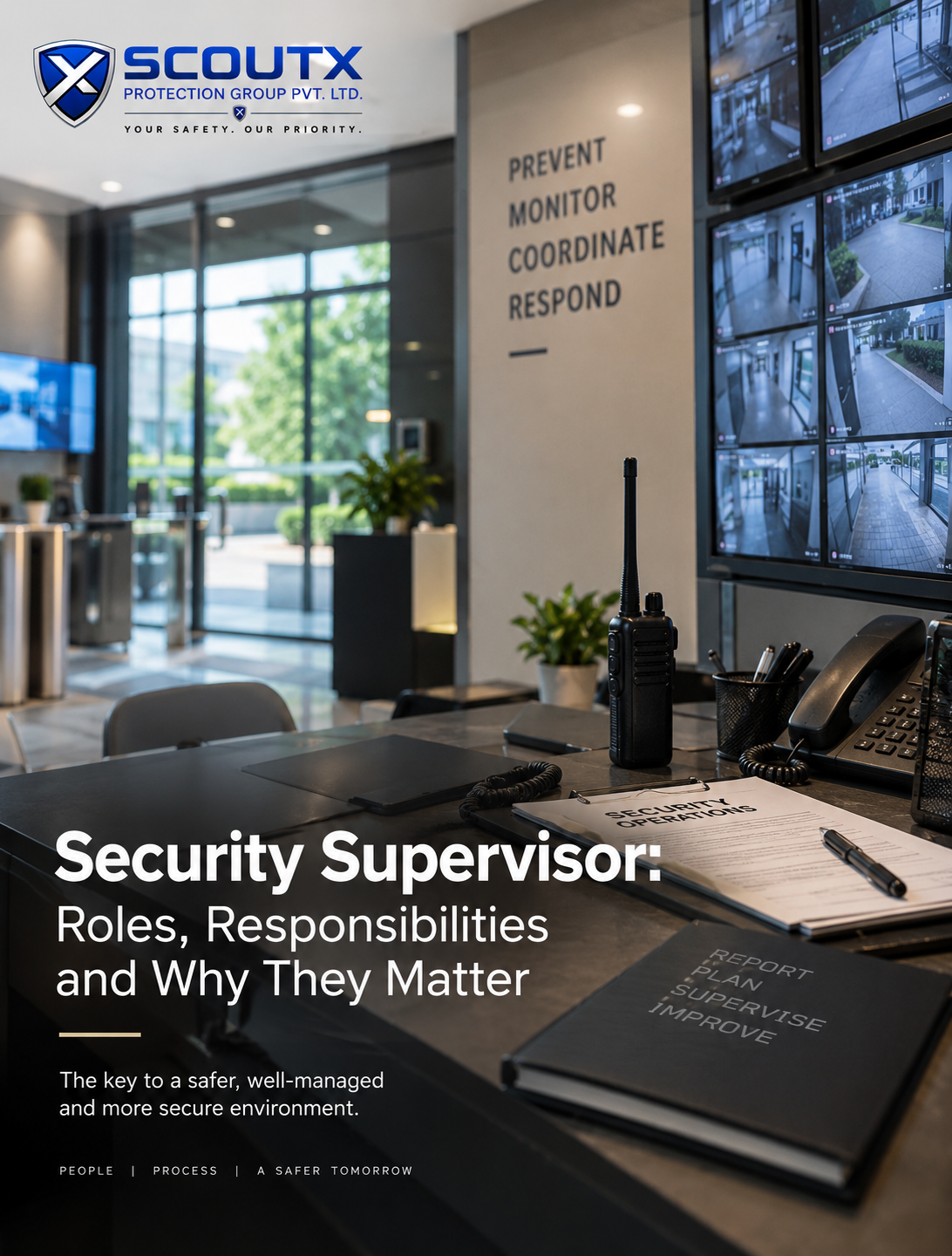
A security guard is responsible for protecting a property, but effective security also requires proper supervision. A security supervisor ensures that security guards follow their duties correctly, security procedures are maintained, and problems are addressed quickly.
For residential societies, offices, commercial properties, and other facilities, a professional security supervisor can play an important role in maintaining consistent security standards.
What Is a Security Supervisor?
A security supervisor is responsible for overseeing security guards and monitoring the overall security operations at a property. They act as a link between security personnel, property management, and the security agency.
The supervisor makes sure that guards are present at their assigned posts, follow instructions, maintain discipline, and respond properly to security situations.
Monitoring Security Guards
One of the main security supervisor responsibilities is managing the guard team. This includes checking attendance, assigning duties, monitoring performance, and ensuring that guards remain alert during their shifts.
Regular supervision helps identify problems such as unattended posts, poor access control, or failure to follow established security procedures.
Conducting Site Inspections
Security supervisors should regularly inspect important areas of the property. These may include entry and exit points, parking areas, boundary walls, common areas, equipment rooms, and other sensitive locations.
Site inspections can help identify security weaknesses before they become serious problems.
Managing Incidents and Emergencies
When a security incident occurs, the supervisor helps coordinate the response. This may involve handling unauthorized entry attempts, theft, disputes, fire emergencies, medical situations, or other unexpected events.
The supervisor should follow the property's emergency procedures, communicate with the appropriate people, and ensure that incidents are properly reported.
Maintaining Security Reports
Accurate reporting is an important part of security management. Supervisors may maintain records of incidents, visitor-related issues, guard attendance, patrols, inspections, and other important security activities.
These records help property management understand recurring problems and take appropriate corrective action.
Coordinating With Property Management
A security supervisor regularly communicates with the property manager, facility management team, or authorized representatives of the client.
They can provide updates about security operations, report concerns, receive instructions, and recommend improvements where necessary.
Security Guard vs Security Supervisor
A security guard primarily focuses on protecting an assigned area, controlling access, patrolling, monitoring visitors, and responding to incidents.
A security supervisor has a broader responsibility. They oversee multiple guards, inspect the site, monitor performance, coordinate responses, maintain reports, and ensure that security procedures are being followed.
Why Security Supervision Matters
Even well-trained security guards need proper supervision. Regular monitoring creates accountability and helps ensure that security standards are maintained throughout the day and night.
A professional security supervisor can help identify gaps, improve communication, and ensure that the security team remains prepared to respond to different situations.
Final Thoughts
Security supervision is an important part of professional security management. A capable supervisor does more than monitor guards—they help maintain discipline, improve coordination, identify security risks, and ensure that procedures are followed consistently.
For properties that require reliable and organized security operations, effective supervision can make a significant difference.